Water meter leak test: what to know in Arizona
Water use shows up on the meter whether or not you can see where it goes. If the meter moves while every fixture is off, water is going somewhere.
The check does not say where, but it says whether, and that decides whether detection is worth booking.
Slab leak signs people notice
Calls are answered around the clock, and same-day visits are the aim.
Meter Still Moving? Talk to a Leak TechWhy Arizona homes get slab leaks
Arizona meters are usually in a box near the street, and the service line runs from there to the house. Anything along it, or under the slab, shows up at the meter.
Pools, drip systems and coolers use water too, so a moving meter does not always mean a slab leak. The check helps sort that out.
How to check
Close every tap and make sure the dishwasher and washer are idle. Lift the meter lid and watch the leak indicator for about five minutes. For a longer read, note the main dial before bed and again in the morning.
Switch the irrigation controller off at its panel and look again. Do not open valve boxes, dig or adjust pool equipment.
What a leak detection technician does
If the meter keeps moving after those steps, a technician tests the service line and the house lines separately. That shows whether the loss is in the yard or under the floor.
Acoustic and thermal equipment is then used to find the exact spot.
Nothing is opened until the leak is marked and you have heard the options.
Not Sure Where the Water’s Going? Call UsReading the meter properly, and what the movement means
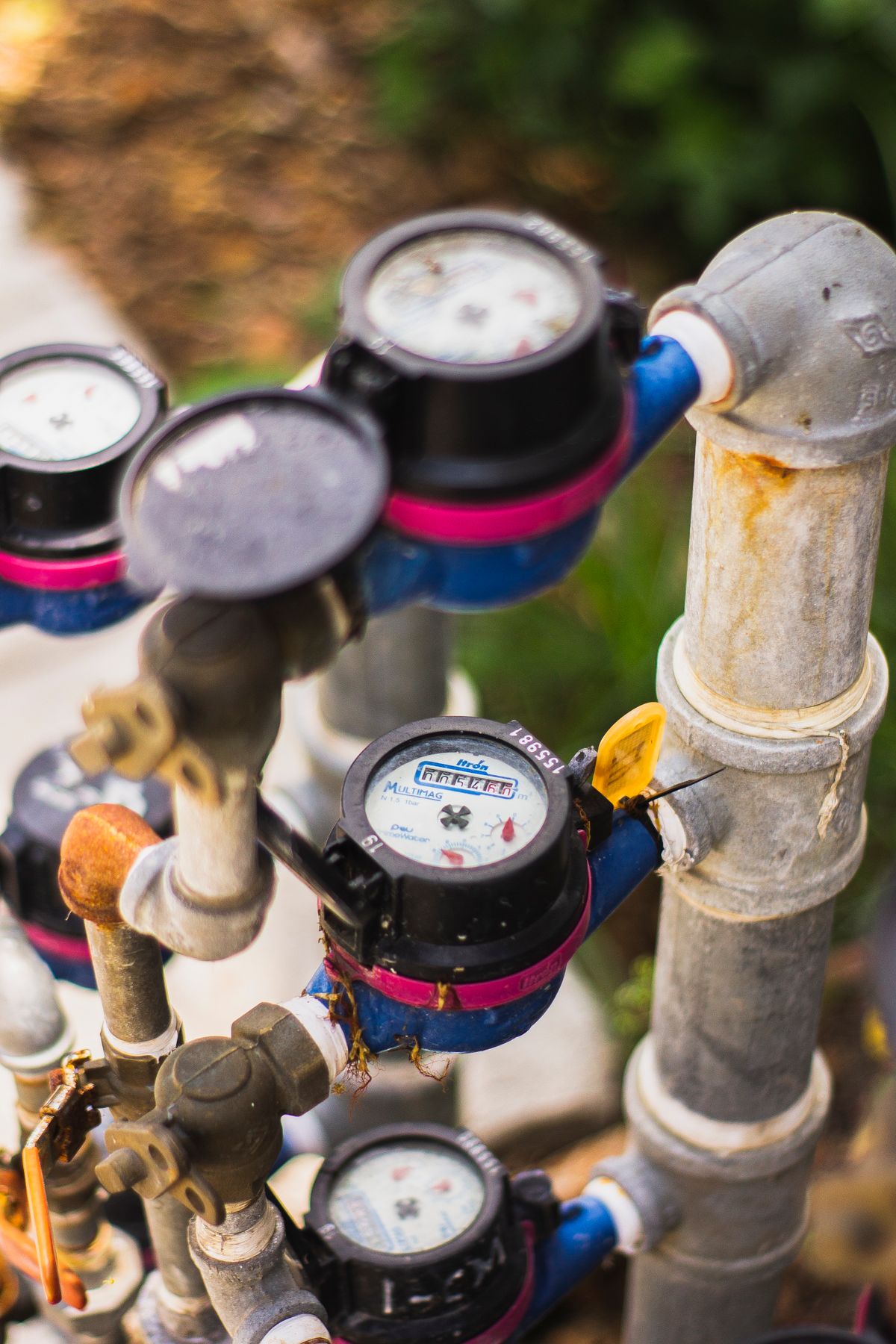
Meters differ, but most have a small low-flow indicator, often a triangle or a small wheel, that spins at the smallest flow. With everything off in the house, that indicator should be still. If it turns, water is moving somewhere.
The first step is to make the house quiet. Close every tap, check that no toilet is refilling, make sure the dishwasher and washer are idle and that any ice maker is not mid-cycle. A single running toilet is the most common cause of a false alarm and is worth a quick look before anything else.
The second reading is with the irrigation controller off. If the indicator was moving and then stops, the water was going to the landscape. If it continues, irrigation is ruled out.
A third reading helps in a house with a pool: note the waterline and check again the next day. An auto-fill can move the meter without anything being wrong in the house.
When the indicator still moves with the house quiet, irrigation off and the pool steady, the movement points to the line from the meter to the house or to lines under the slab. At that point a call is worth making, and the readings you took give the technician a head start.
Some people photograph the dial at two times a few hours apart with no water used in between. That gives a clean number to describe on the phone.
Getting a clear reading
Find the meter, usually in a box near the street. Lift the lid carefully; insects and spiders sometimes shelter inside. The leak indicator is usually a small triangle, star or dial that turns when water flows.
Turn off every tap, appliance and the irrigation controller. Make sure no one uses water during the check.
Watch the indicator for five minutes. If it moves, water is leaving the system. If you want a second check, note the main dial reading before bed and again in the morning with nothing used.
Take a photo of the dial at each reading.
What the results mean
A still indicator means no water is moving at that moment. It does not rule out an intermittent leak, such as a toilet that runs now and then.
A moving indicator with everything off means water is leaving somewhere. Switch the irrigation off and check again; if it stops, the yard is the likely source.
If it keeps moving with the irrigation off, the house side or the service line is the next suspect. A pool auto-fill can also keep a meter moving; mark the waterline to check.
Call with the results.
Common mistakes when reading the meter
The most common mistake is not turning everything off. An ice maker refilling, a dishwasher halfway through a cycle, a softener regenerating or a toilet refilling after a flush will all move the indicator. Give the house a few minutes of quiet before you start watching.
The second is reading the wrong dial. Many meters have a large sweep hand, a row of numbers and a small leak indicator. The leak indicator is the one that shows the smallest flow, and it is the one to watch for this check.
The third is forgetting the irrigation. A controller set to run early in the morning can start while you are reading. Switch it off at its panel before the check, not just pause a zone.
The fourth is reading too briefly. A slow leak may only move the indicator a little in a minute. Five minutes gives a clearer answer, and a reading before bed and again in the morning gives an even clearer one.
If in doubt, take a photo of the dial at the start and at the end. The photos are useful to the dispatcher and the technician.
When the meter box is hard to reach
Meter boxes are sometimes buried under gravel, covered by landscaping or tucked behind a fence. If you cannot find yours, look near the street at the front of the property, often close to the driveway.
If the lid is stuck or heavy, do not force it. Use a flat tool to lift one edge, and keep your hands clear of the opening until you have looked inside. Insects and small animals sometimes shelter in meter boxes.
If the meter face is dirty or fogged, wipe it gently. You should be able to see the leak indicator clearly before you start timing.
If you still cannot read the meter, tell the dispatcher. The technician can read it on arrival.
Close the lid when you are done. An open meter box is a trip hazard.
Have the meter result ready: what the dial did with everything off, and again with the irrigation off.
Call for a QuoteQuestions about water meter leak checks
I cannot find my meter.
It is usually near the street or sidewalk under a flush lid. If landscaping covers it, skip the check and call.
Is a slow movement still a leak?
Possibly. A slow, steady movement is worth reporting even if it is small.
The meter only moves sometimes.
That can be a toilet, a hidden appliance drain or a pool fill. Tell the technician the pattern.
Who owns the line from the meter to the house?
Usually the homeowner. If you are unsure, check your property documents.
Where is the meter?
Usually near the front, under a lid flush with the ground close to the street or sidewalk. Lift the lid with care and keep clear of the road.
What if my meter has no low-flow indicator?
Read the dials at two times with no water used between. A change points to a leak.
Can a toilet cause the movement?
Yes, a toilet that refills on its own is a common cause. Listen for it before you decide it is the slab.
How long should I wait between readings?
A few minutes shows the low-flow indicator. A few hours between dial readings is clearer for slow leaks.
Is it safe to lift the meter lid?
Do it carefully, in daylight, and keep your hands clear of the opening. If it is stuck or looks unsafe, leave it and describe what you see on the call.