Slab leak repair & replacement services in ArizonaFind the leak under the slab. Then decide how to fix it.
A warm tile in the hallway. A water bill that jumped when nothing changed. A meter that keeps turning after the house has gone quiet. One call connects you with an independent local leak technician who works on Valley slabs, and who starts by ruling out the pool, the drip system and the yard line before anyone mentions concrete. Whether the answer turns out to be a spot repair or replacing the line, you hear both options before any work is agreed.
Calls answered 24/7. Same-day visits are the aim across the Valley, when a crew is open.

- Calls answered 24/7
- Same-day visits are the aim
- Each contractor quotes its own price before work starts.
- Ask each contractor about its guarantee
- Acoustic, thermal & pressure equipment
- Straight answers
Where is the water going?
Rule things out before you rule the slab in.
In most Arizona homes the house is not the only thing using water. A pool tops itself up. Drip lines run before sunrise. The service line from the meter can cross a long stretch of yard before it reaches the foundation. Some homes still run an evaporative cooler on the roof. Any one of them can lift a bill or keep the meter turning.
So a good leak call begins with elimination. These three checks take an evening and a morning, need no tools, and give the technician a head start.
We don't repair pools, spas, irrigation, coolers or softeners. These checks are only there to rule them out.
-
1
Read the meter with everything off
Turn off every tap and appliance inside and make sure nothing is filling. Lift the lid on the meter box near the street and watch the small leak indicator, often a triangle or a tiny dial, for a few minutes.
Still: the plumbing is quiet. A fixture that runs now and then, or ordinary use, is more likely.
Moving: something is drawing water. Go to step 2.
-
2
Switch the irrigation controller off
Set the controller to off. That's all: no valves, no digging. Give it a few minutes and watch the meter again.
Stopped: the drip system or its feed is the likely source, which is a landscape matter, not a slab one.
Still moving: go to step 3.
-
3
Watch the pool level for a day
If there's a pool with an automatic fill, note where the waterline sits against a tile edge in the morning, then look again the next morning. Summer evaporation is real, so tell the technician what you saw and let them help read it.
Dropping fast: mention it on the call. Pool repair is a separate trade.
Holding steady: go to step 4.
-
4
Likely under the house, or under the yard
A meter that keeps moving with the house quiet, the irrigation off and the pool steady points at two places: the service line between the meter and the house, or a line under the slab. Telling those apart is where the technician begins.
Meter Still Moving? Talk to a Leak TechHave your three results handy. They shorten the visit.
Is it a slab leak?
Six things homeowners notice first
None of these proves a leak on its own. Two or three together, especially alongside a meter that moves with the house quiet, are worth a call.
A warm patch of floor
Tile that feels warm in the same place, morning and night, often sits over a hot-water line that has opened. Bare feet find it before anyone else does.
2A bill that won't come back down
One high month can be guests or a hot spell. A bill that climbs and stays up, with no change in how the house is used, deserves the meter check.
3Water running when nothing is on
A faint hiss in a wall or under a floor, easiest to hear late at night. It can travel along the pipe, so the sound isn't always right above the leak.
4Damp baseboards or lifting tile
Swollen baseboard, carpet tack strip that stays damp, grout that darkens or tile that sounds hollow. Water from below finds the weakest edge.
5A water heater that never rests
If the heater seems to be refilling and reheating with no one using hot water, a hot line may be leaking somewhere downstream of it.
6The meter moves with the house quiet
The most useful single clue there is. If the leak indicator turns with every fixture off and the irrigation controller off, water is leaving somewhere.
Hard water and pinholes
Why so many Valley leaks start as a hole you could cover with a pencil tip
Hard water and copper
Water across the Valley carries a heavy mineral load. Over decades, inside a copper line set in or under the slab, that chemistry and the steady movement of water can wear the pipe wall from the inside until a pinhole opens.
Many homes built from the 1960s into the 1980s were plumbed with copper under the floor. Nobody can tell what is under a particular house until it's checked, and the technician will say what they find.
Heat and the hot line
A hot-water line under the slab warms and cools many times a day. Each cycle moves the pipe a little against concrete, gravel and fill. Months of summer ground heat add to that movement.
Where a hot line rubs or thins, the leak often announces itself as warmth in the floor, which is why hot-side leaks tend to be found sooner than cold ones.
Caliche and desert soil
Many Valley lots sit on caliche, a cemented layer that can be close to rock, along with soils that swell and shrink with moisture. Both can make reaching a line under the slab slower work.
It's one reason a reroute is sometimes the cleaner choice. The technician will explain what the ground means for your repair route.

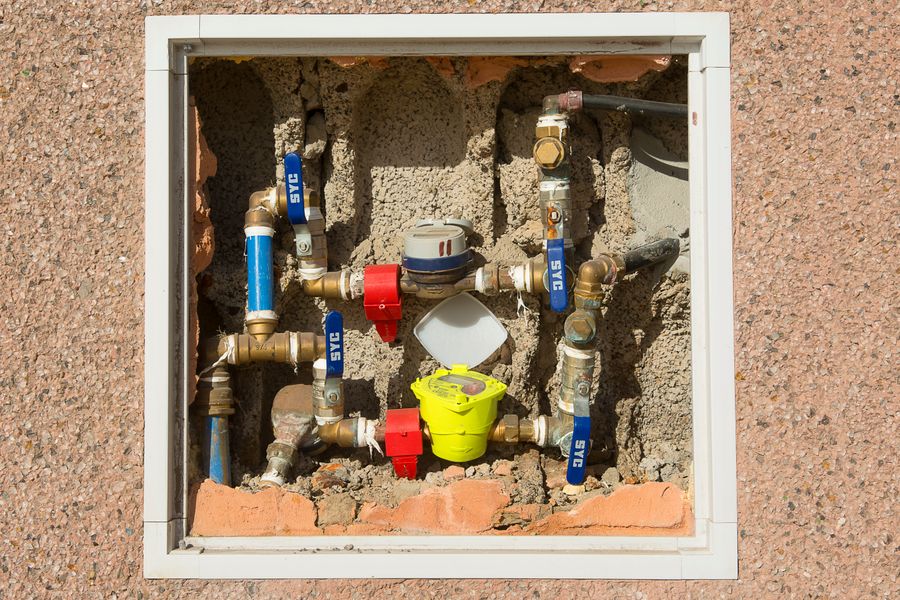
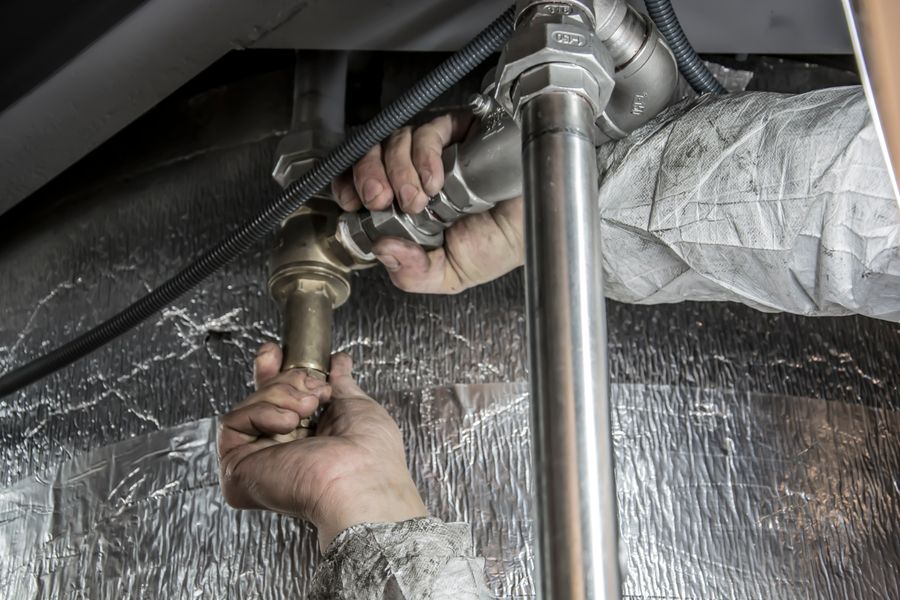
Fix options at a glance
Four ways to repair or replace a slab leak line
Once the line is found, the technician may present one or more of these. What steers the choice is where the leak sits, how many there have been, the condition of the rest of the run, your flooring, and what you'd like to happen if another line fails later. The contractor sets out pricing once the leak is located.
Through the floor
Spot repair
A small opening is made at the marked spot and the damaged section is replaced. Often discussed for a single, well-located leak on an otherwise sound line.
Around the slab
Reroute
The leaking run is abandoned and a new line is taken through walls or the attic. It avoids breaking the floor and is common when tile is hard to match.
Inside the pipe
Pipe lining
Where a technician recommends it, the existing line is cleaned and coated from within. Whether it suits depends on the pipe and the damage.
The whole system
Partial or full repipe
After a second or third leak, replacing a section of the house, or all of it, usually becomes part of the conversation. You decide when.
Slab leak help
Start with the problem you have
Leaks under the slab are all we deal with. Each page below takes one situation and walks through it.
Where we connect you
Slab leak repair and replacement across Arizona, city by city
73 cities and communities across 13 counties and 222 ZIP codes. Local crews we work with serve all of these areas.
Phoenix
From 1960s ranch homes with copper under the floor to 1990s and 2000s tracts on the north and south edges, Phoenix covers every Valley housing era. Pools and drip systems are common, so most calls start with the meter check.
Slab leak repair in Phoenix →When you call
What helps us send the right crew
We connect you with an independent local leak technician near you. A few details make the first visit go further:
- Which signs you've noticed, and for how long
- Your meter results, with the irrigation on and off
- Anything you saw in the pool level
- Roughly when the house was built, and any earlier leaks
- Whether the home sits empty part of the year
- Whether water is surfacing, and if the main is off
- For townhomes, your HOA or manager's contact
Water coming up now?
While you wait for the crew
- 1Close the main shutoff if you can reach it safely. Where to find it.
- 2Keep people and pets clear of the wet area, and stay away from water near outlets, appliances, pool equipment or coolers.
- 3Move rugs, furniture and valuables off the floor nearby.
- 4Call us. Leave the floor, the pipes and the digging to the technician.
Smell gas? Leave the house, then call the gas utility and emergency services from outside.
Questions
What Arizona homeowners ask about slab leaks
Water Bill Jumped? Call UsBring the bill. The month-to-month pattern tells us a lot.
Do the meter check with the house quiet, then again with the irrigation controller off, and watch the pool level from one morning to the next. If the meter still moves with all three ruled out, the leak is most likely on the service line or under the house. The technician confirms which by isolating the lines.
Not always. Some leaks are left in place and bypassed with a reroute through the walls or attic. Others are reached through a small opening at the marked spot. Locating comes first, and you’ll be told what each option involves before anything is opened.
Very hard water and years of flow can thin copper from the inside, and once one pinhole has opened, other parts of the same run may be similar. A technician can tell you what they see in the section they reach, though no one can grade an entire buried line from one spot.
No. Sun through a window, a duct run or an appliance can warm tile. A patch that stays warm overnight, in the same place, with the water heater running more than usual, is the combination worth calling about.
Yes. Water escaping under a slab can soak into the ground below for a long time without surfacing. A bill that rises with no visible water is one of the most common reasons people call us.
A reroute replaces one leaking run with a new line taken around the slab. A repipe replaces a larger part of the plumbing, or all of it. Reroutes usually answer a single leak; repiping tends to come up after several.
Before turning anything on, look at the meter with every fixture off. Then walk the floors barefoot for warm or damp spots and glance at baseboards near bathrooms and the kitchen. If the meter is moving or anything feels off, call before running the house as normal.
Yes. The technician works inside your unit and explains if a line seems to run toward a shared wall or common area. It’s worth letting your HOA or property manager know a leak visit is booked, and having their contact ready when you call.
We’re a referral service. Your call is connected to an independent local leak-detection and plumbing contractor serving your area, who quotes the job, carries out the work and is responsible for it.
The water is going somewhere. Let's find out where.
One call, a local leak crew, and a plain answer about what's under your floor.
(833) 937-0860 · answered around the clock